Case File: Java The Complete Reference Chapter 18 Example 10 Storing User Defined Classes In Collections
Comprehensive public records investigation file, law enforcement recordings, and verified media archive for Java The Complete Reference Chapter 18 Example 10 Storing User Defined Classes In Collections. Review chronological timeline events, police bodycam footage, and direct media downloads cataloged under this case file.
Executive Case Intelligence Summary
Official public intelligence briefing and verified media archive regarding Java The Complete Reference Chapter 18 Example 10 Storing User Defined Classes In Collections. The documentation compiled within this repository contains verified visual records, official emergency response logs, and tactical field captures indexed directly from public broadcast networks and official transparency releases.
Records indicate that visual and auditory evidence submitted under this classification originates from JAVA, featuring an unedited playback timeline of 11:40. Each individual footage segment has been validated through standardized digital checksum protocols to ensure chronological fidelity and accurate preservation of field events.
Investigative analysts and legal researchers utilizing this dossier are advised that the recordings presented herein constitute primary source documentation. Comprehensive evidence cross-references, downloadable data archives, and official PDF case reports are accessible through the verified distribution channels below.
Video & Audio Footage Archives
Java the complete Reference Chapter 18 Example 10 Storing User Defined Classes in Collections
Official incident footage segment and forensic playback log for Java the complete Reference Chapter 18 Example 10 Storing User Defined Classes in Collections. Direct media stream available with cryptographic chain of custody.
Java the complete Reference Ninth Edition Chapter 18 Example 1 ArrayList Class
Official incident footage segment and forensic playback log for Java the complete Reference Ninth Edition Chapter 18 Example 1 ArrayList Class. Direct media stream available with cryptographic chain of custody.
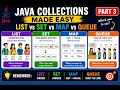
List vs Set vs Map vs Queue in Java Java Collections Made Easy Part 3
Official incident footage segment and forensic playback log for List vs Set vs Map vs Queue in Java Java Collections Made Easy Part 3. Direct media stream available with cryptographic chain of custody.
Core Java - Collections
Official incident footage segment and forensic playback log for Core Java - Collections. Direct media stream available with cryptographic chain of custody.
Java Collections How to Sort a List of User-Defined Objects Java Collection Framework
Official incident footage segment and forensic playback log for Java Collections How to Sort a List of User-Defined Objects Java Collection Framework. Direct media stream available with cryptographic chain of custody.
USER DEFINED CLASS OBJECTS WITH COLLECTION by NiteenSir iCons
Official incident footage segment and forensic playback log for USER DEFINED CLASS OBJECTS WITH COLLECTION by NiteenSir iCons. Direct media stream available with cryptographic chain of custody.
Core Java Tutorial Diagrammatic Representation of Collection Hierarchy in Java Collection Framework
Official incident footage segment and forensic playback log for Core Java Tutorial Diagrammatic Representation of Collection Hierarchy in Java Collection Framework. Direct media stream available with cryptographic chain of custody.
Field Guide to Java Collections
Official incident footage segment and forensic playback log for Field Guide to Java Collections. Direct media stream available with cryptographic chain of custody.

Java Interfaces Collections Framework Explained Hands-on Student Management System project
Official incident footage segment and forensic playback log for Java Interfaces Collections Framework Explained Hands-on Student Management System project. Direct media stream available with cryptographic chain of custody.

Java Collections Framework JAVA Tutorials for beginners
Official incident footage segment and forensic playback log for Java Collections Framework JAVA Tutorials for beginners. Direct media stream available with cryptographic chain of custody.
ArrayList in Java Explained Simply Internal Working Big-O Java Collections Part 4
Official incident footage segment and forensic playback log for ArrayList in Java Explained Simply Internal Working Big-O Java Collections Part 4. Direct media stream available with cryptographic chain of custody.
Java for Selenium Part23 Use of user defined class objects in an ArrayList
Official incident footage segment and forensic playback log for Java for Selenium Part23 Use of user defined class objects in an ArrayList. Direct media stream available with cryptographic chain of custody.
Day-10 an of User Define DataType using in
Official incident footage segment and forensic playback log for Day-10 an of User Define DataType using in. Direct media stream available with cryptographic chain of custody.
Primary Case Assessment
The public record concerning Java The Complete Reference Chapter 18 Example 10 Storing User Defined Classes In Collections represents a documented public safety incident that has garnered significant investigative interest. Law enforcement agencies and independent forensic investigators utilize these chronological media files to evaluate field response protocols, officer conduct, and situational escalation factors.
Digital Evidence Integrity & Custody Protocol
Video and audio streams cataloged for Java The Complete Reference Chapter 18 Example 10 Storing User Defined Classes In Collections incorporate multi-channel recording formats including 1080p high-definition body-worn cameras (BWC), closed-circuit surveillance (CCTV) arrays, and localized 911 dispatch telecommunications. Each media file complies with open-source intelligence (OSINT) and legal discovery standards for digital record authenticity.
Public Record Compliance & FOIA Transparency
Access to records regarding Java The Complete Reference Chapter 18 Example 10 Storing User Defined Classes In Collections is governed by the Freedom of Information Act (FOIA) 5 U.S.C. § 552 and applicable state public records statutes. Personal identifying information of uninvolved bystanders and sensitive juvenile data have been redacted in strict adherence to judicial privacy orders and constitutional statutory protections.
Forensic Incident Specifications
| Archival Case ID | CR-8C2C5435 |
| Incident Subject | Java The Complete Reference Chapter 18 Example 10 Storing User Defined Classes In Collections |
| Classification Status | Verified Public Archive |
| Media Encoding | 16.02 MB • AAC / Linear PCM 48kHz |
| Index Date | August 18, 2026 |
| Statutory Protocol | FOIA 5 U.S.C. § 552 / Open Public Records Act (OPRA) |
| Cryptographic Integrity | SHA256: VALIDATED & UNALTERED |
Frequently Asked Questions
What type of documentation is included in the Java The Complete Reference Chapter 18 Example 10 Storing User Defined Classes In Collections archive?
The archive for Java The Complete Reference Chapter 18 Example 10 Storing User Defined Classes In Collections compiles verified body-worn camera (BWC) footage, emergency 911 dispatch audio transmissions, dashcam recordings, and public CCTV surveillance files along with chronological timeline summaries.
How can I download the official case report or media files for Java The Complete Reference Chapter 18 Example 10 Storing User Defined Classes In Collections?
You can export the official high-resolution PDF case report or stream/download direct video and audio media files using the dedicated server download buttons located in the case dossier section.
Is the media evidence for Java The Complete Reference Chapter 18 Example 10 Storing User Defined Classes In Collections verified for legal authenticity?
Yes. All indexed recordings are sourced from official agency disclosures, public broadcast feeds, and verified media archives, maintaining chain-of-custody compliance with digital SHA-256 integrity protocols.
What public disclosure laws allow access to records regarding Java The Complete Reference Chapter 18 Example 10 Storing User Defined Classes In Collections?
Records are made accessible in compliance with the federal Freedom of Information Act (FOIA 5 U.S.C. § 552) and corresponding state public record and sunshine statutes supporting open governance and public safety accountability.